
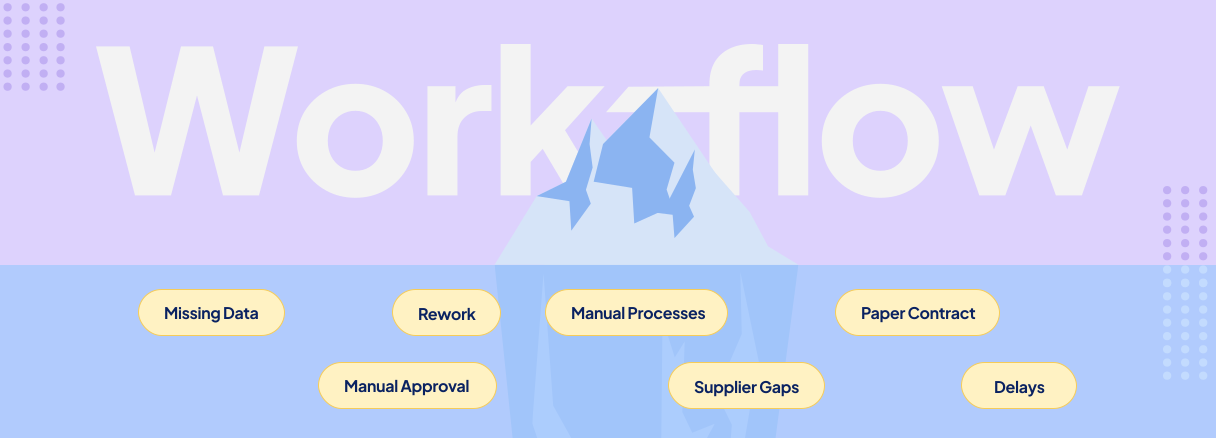
The biggest hidden cost in procurement is rarely the price on the supplier’s quote. More often, the invisible friction happens between systems – the hours of tedious, manual work required to turn a simple need into a completed purchase.
Picture a typical purchase: the supplier is reliable, the price seems fair, and the items eventually show up. Yet behind the scenes, your team wastes hours copying data between systems, chasing approvals through email, checking statuses, and fixing mismatched invoices later.
This is the reality for many companies. The individual tools – request systems, approval platforms, ERP, supplier portals – may each work well on their own. The problem arises in the gaps between them.
Procurement workflows are the structured, repeatable path a company follows to move from a business need all the way to payment and reporting. Think of them as the operating system behind every purchase.
A good workflow is far more than a simple checklist. It clearly defines who is responsible for each step, what information must be provided, which approvals are required, and how every decision is captured and visible in real time. It creates a single source of truth instead of scattered emails and documents.
Think of it like this: when a marketing team orders new campaign materials, a good workflow automatically routes the request to the right approver, links it to the correct budget, notifies the supplier, and updates the status in real time. No more lost emails or “Where are we with this?” conversations.
The outcome is simple but powerful: fewer chase–ups, fewer errors, and much less time spent piecing things together manually. Teams can finally focus on actual work instead of fighting the process.
A typical procurement workflow includes five connected components:
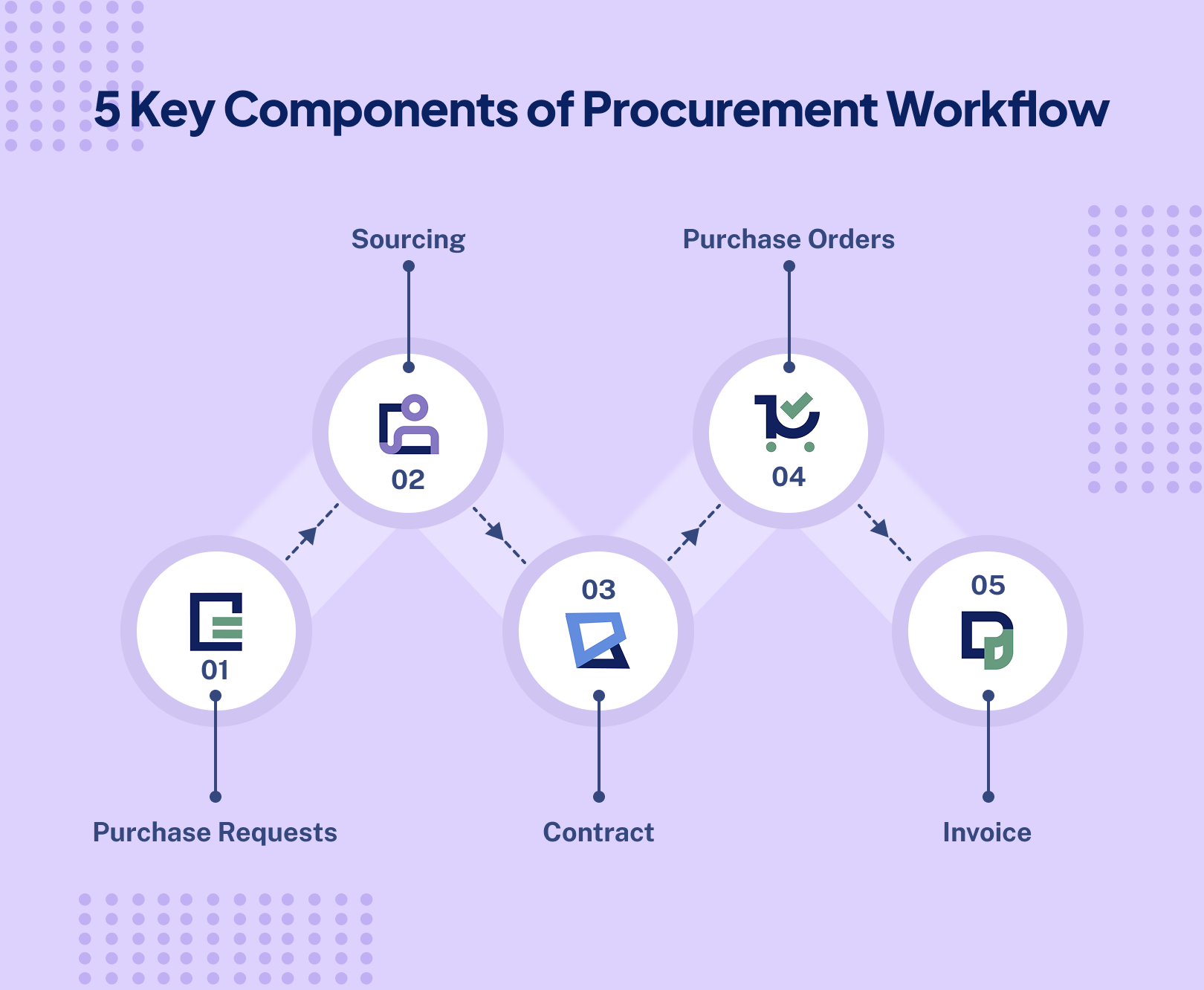
When these components live in disconnected systems, teams lose status visibility, duplicate data, and make decisions from incomplete context.
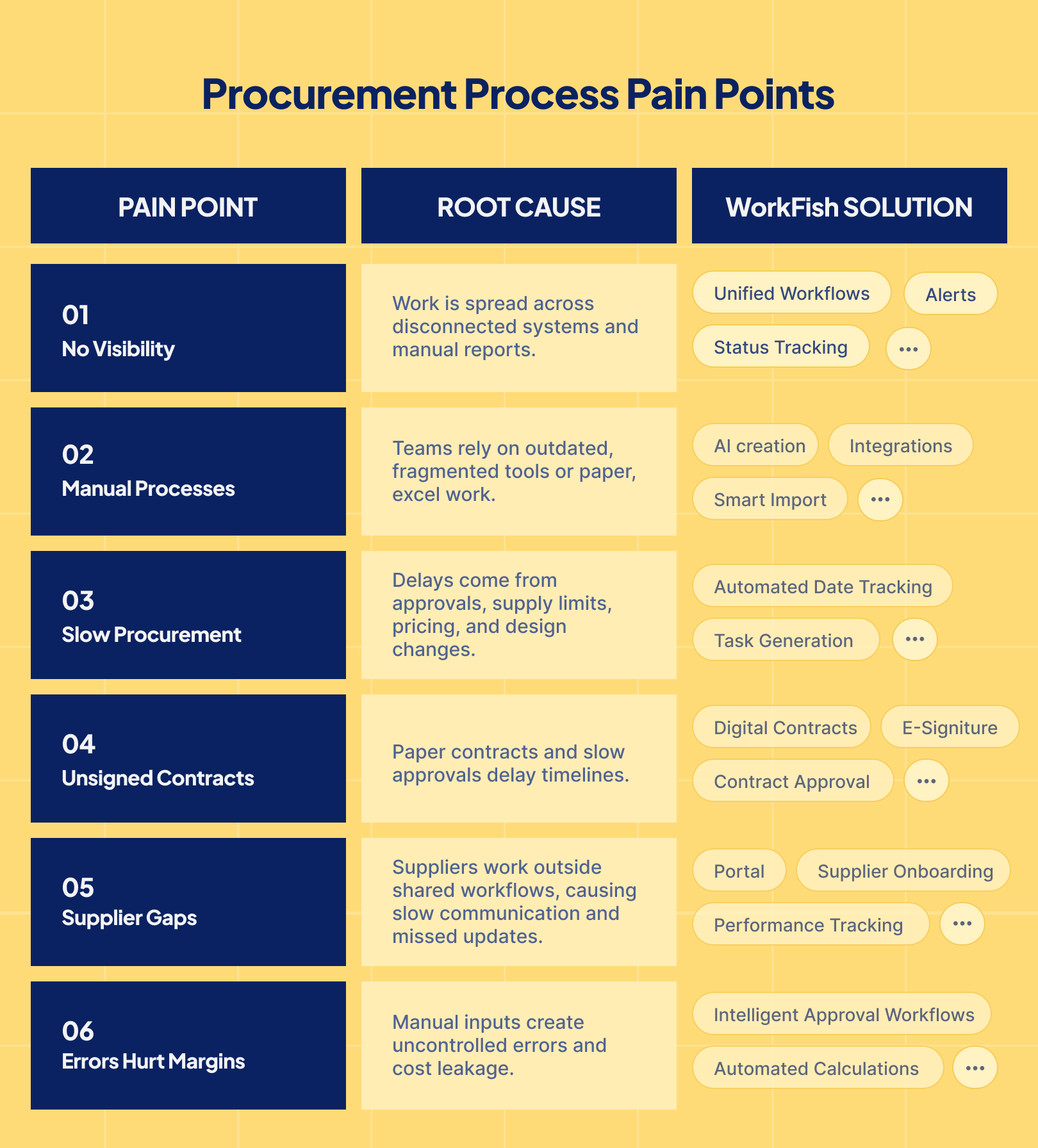
Procurement suffers from persistent lack of real-time visibility. Status updates depend on phone calls, emails, and ad hoc conversations. Package progress surfaces mainly in meetings, while tender status, pricing, and approvals require repeated manual inquiries.
Collaboration scattered across multiple disconnected systems, with progress tracked through manual, static reports.
WorkFish connects and automates the entire procurement process within one intelligent platform, reducing manual effort and improving accuracy.
Organizations can configure the platform by enabling only the applications required for their procurement workflow, creating a single source of truth instead of managing multiple disconnected systems. Key capabilities include:
Procurement remains burdened by manual, fragmented workflows. Emails, phone calls, spreadsheets, and scattered documents dominate daily operations. A single package often triggers hundreds of repetitive actions across more than twenty disconnected systems, with constant data transposition creating inefficiencies and errors.
Reliance on over twenty fragmented, outdated systems that have yet to be modernized.
WorkFish connects and automates the entire procurement process within one intelligent platform, reducing manual effort and improving accuracy. Key capabilities include:
This unified approach streamlines operations, minimises risk, and boosts overall efficiency.
Procurement is frequently hindered by significant delays that stall project momentum. While striving to deliver on time, teams must balance speed with value maximization and margin protection in a competitive environment. Waiting time often exceeds actual working time, reducing overall productivity.
Underestimated timeframes, design changes, limited supply chain availability, prolonged pricing negotiations, and slow internal approvals.
WorkFish helps teams stay ahead of procurement timelines through automated notifications and intelligent task management, replacing manual tracking with structured visibility. Key capabilities include:
Procurement faces serious risks when contracts remain unsigned while work begins on site. Subcontractors often start without formal agreements, driven by project pressure, while letters of intent serve as temporary measures that frequently go unconverted.
Lengthy drafting and approval cycles, combined with reliance on paper contracts and wet signatures, push timelines into the red.
WorkFish streamlines the full contract lifecycle by combining digital tools, automation, and visibility to reduce delays and risks. Key capabilities include:
This integrated approach ensures contracts are completed faster, governed more effectively, and actively managed throughout their lifecycle, delivering stronger control and reduced exposure.
Procurement errors remain a silent drain on project margins. While perfection is impossible, many mistakes – missed lead times, scope gaps, delays, and inconsistencies – are entirely avoidable. These issues typically represent 0.5–1% of project value, translating to significant financial risk on every major contract. The same errors repeat across projects and teams.
Procurement stays largely uncontrolled and overly dependent on manual human inputs.
WorkFish strengthens control and accuracy across the procurement process through automation, smart approvals, and supplier performance visibility. Key capabilities include:
By embedding these controls, WorkFish significantly reduces avoidable mistakes, protects project margins, and delivers greater reliability throughout the procurement lifecycle.
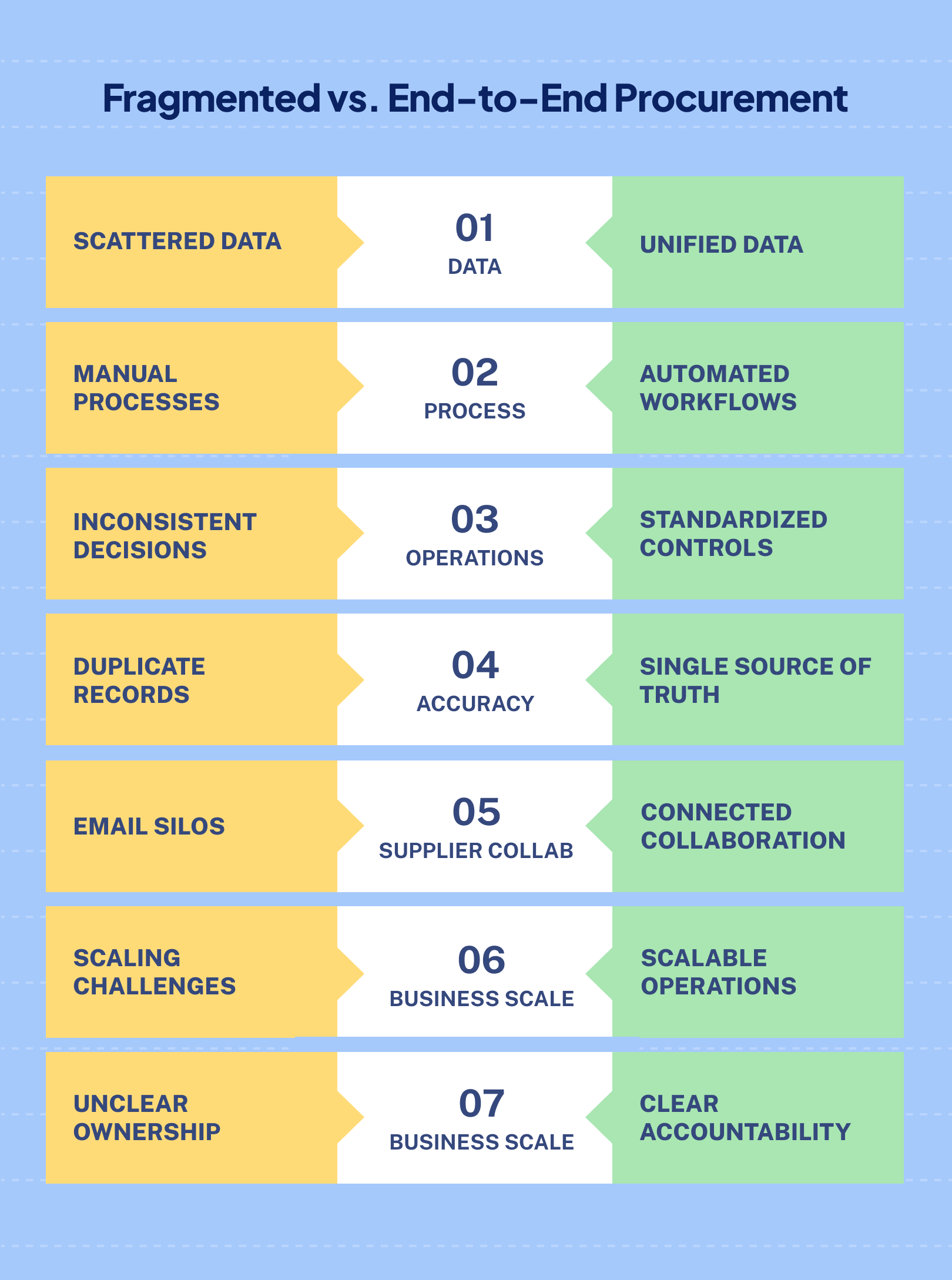
Connected procurement workflows transform traditional buying into a transparent, efficient, and controlled process. By unifying everything in one intelligent platform, teams gain real-time visibility, automate repetitive tasks, compress timelines through parallel processing, and reduce errors with built-in guardrails. This leads to faster delivery, lower risk, stronger governance, and more capacity for strategic value creation.